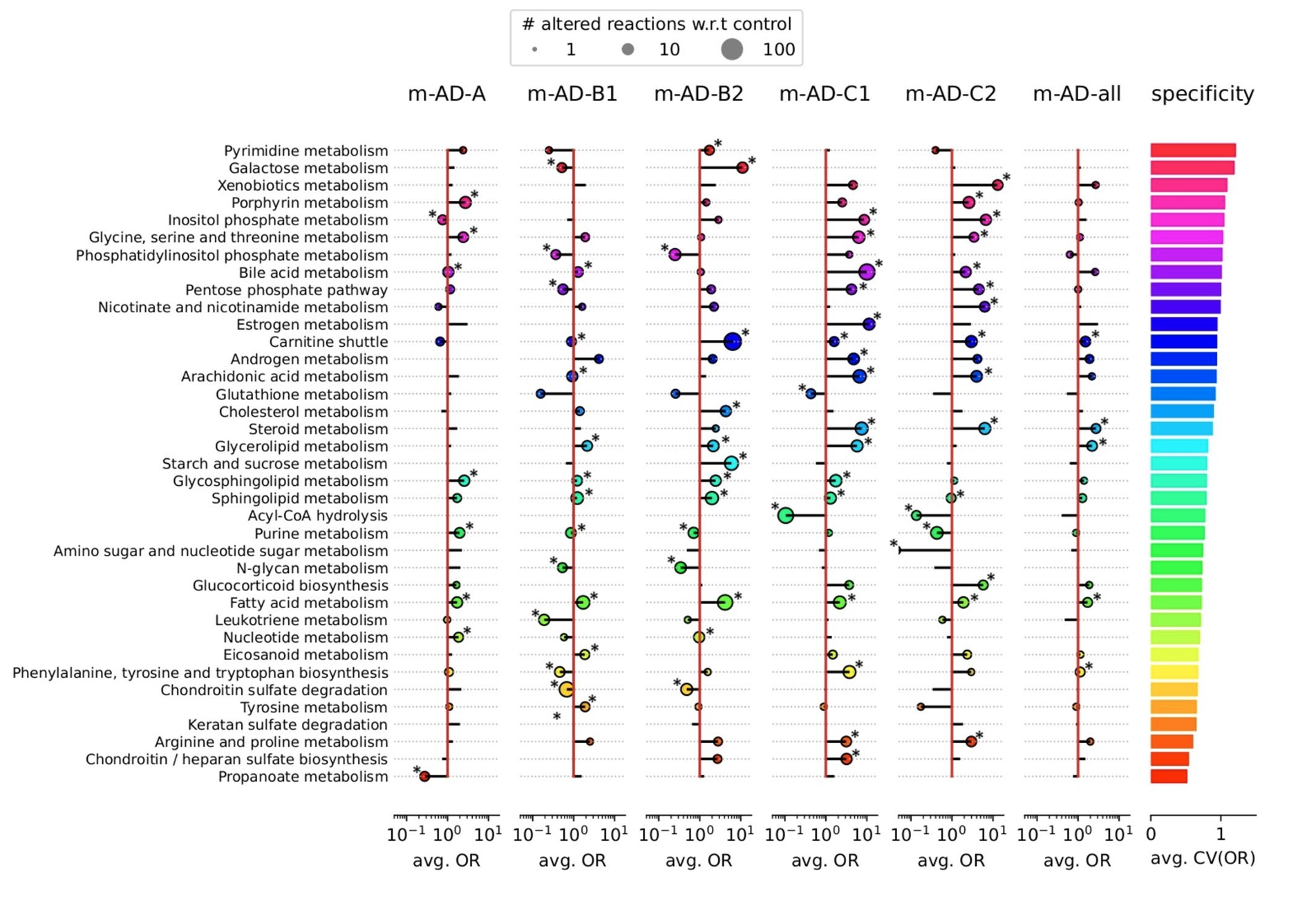
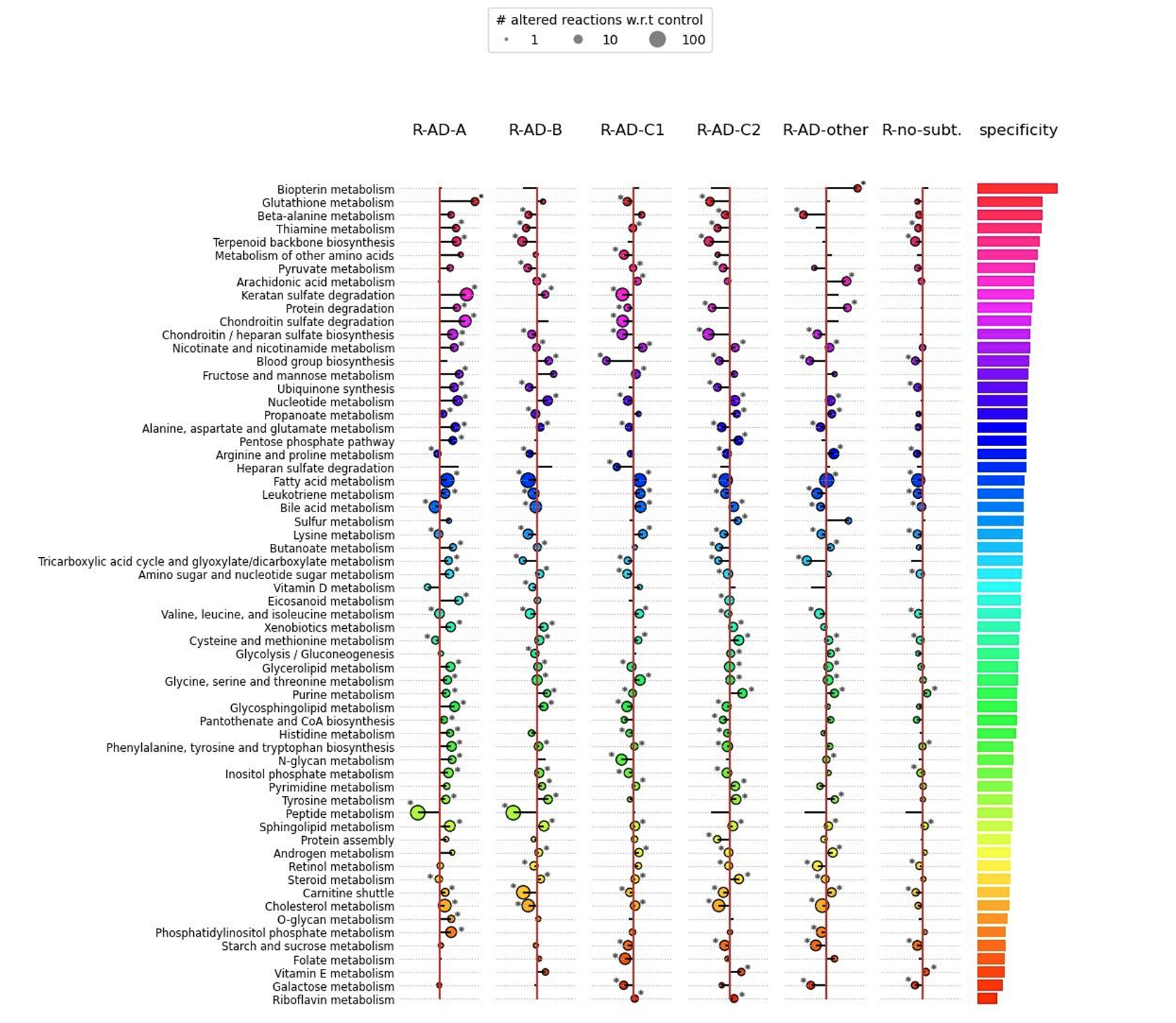
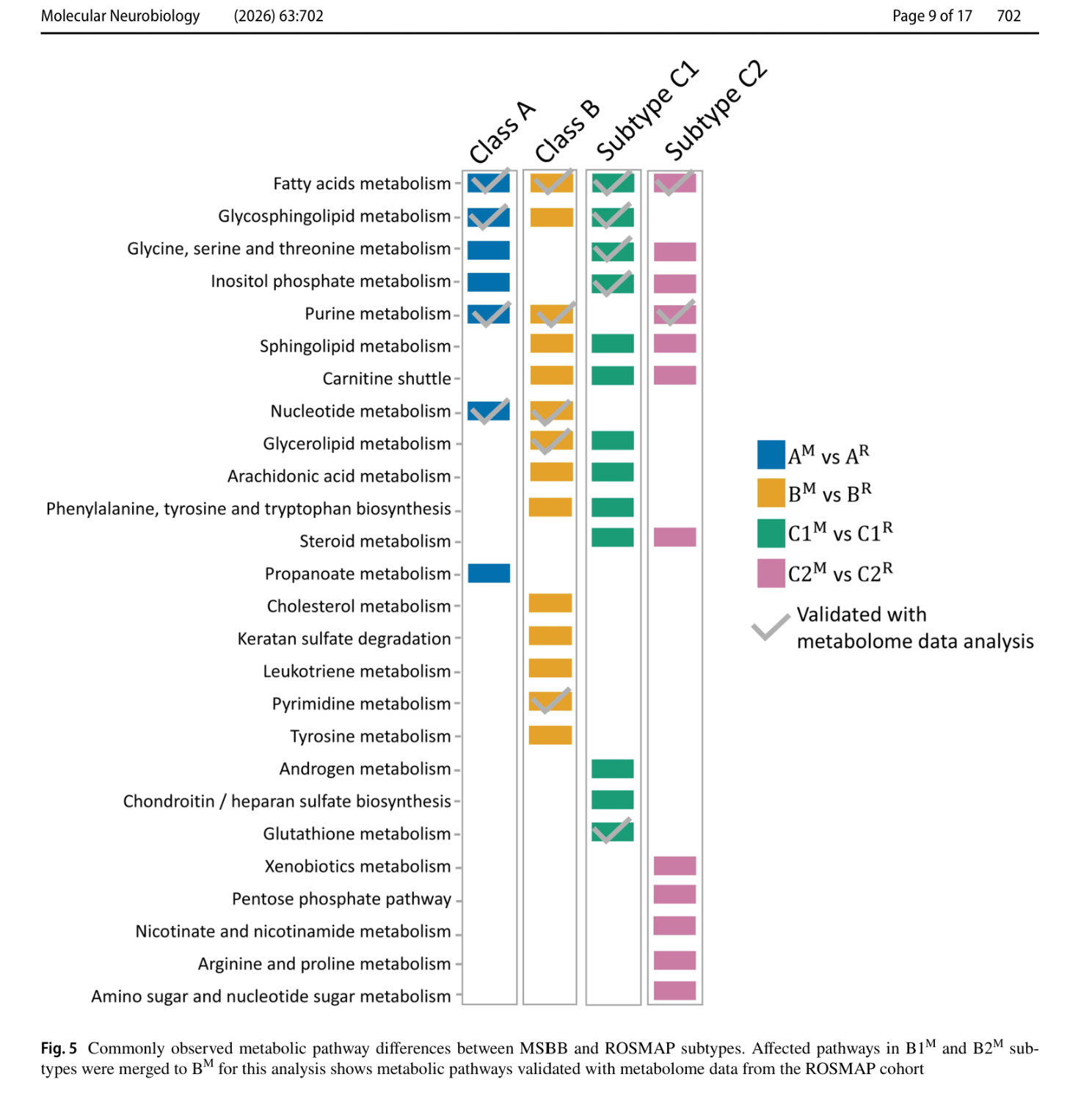
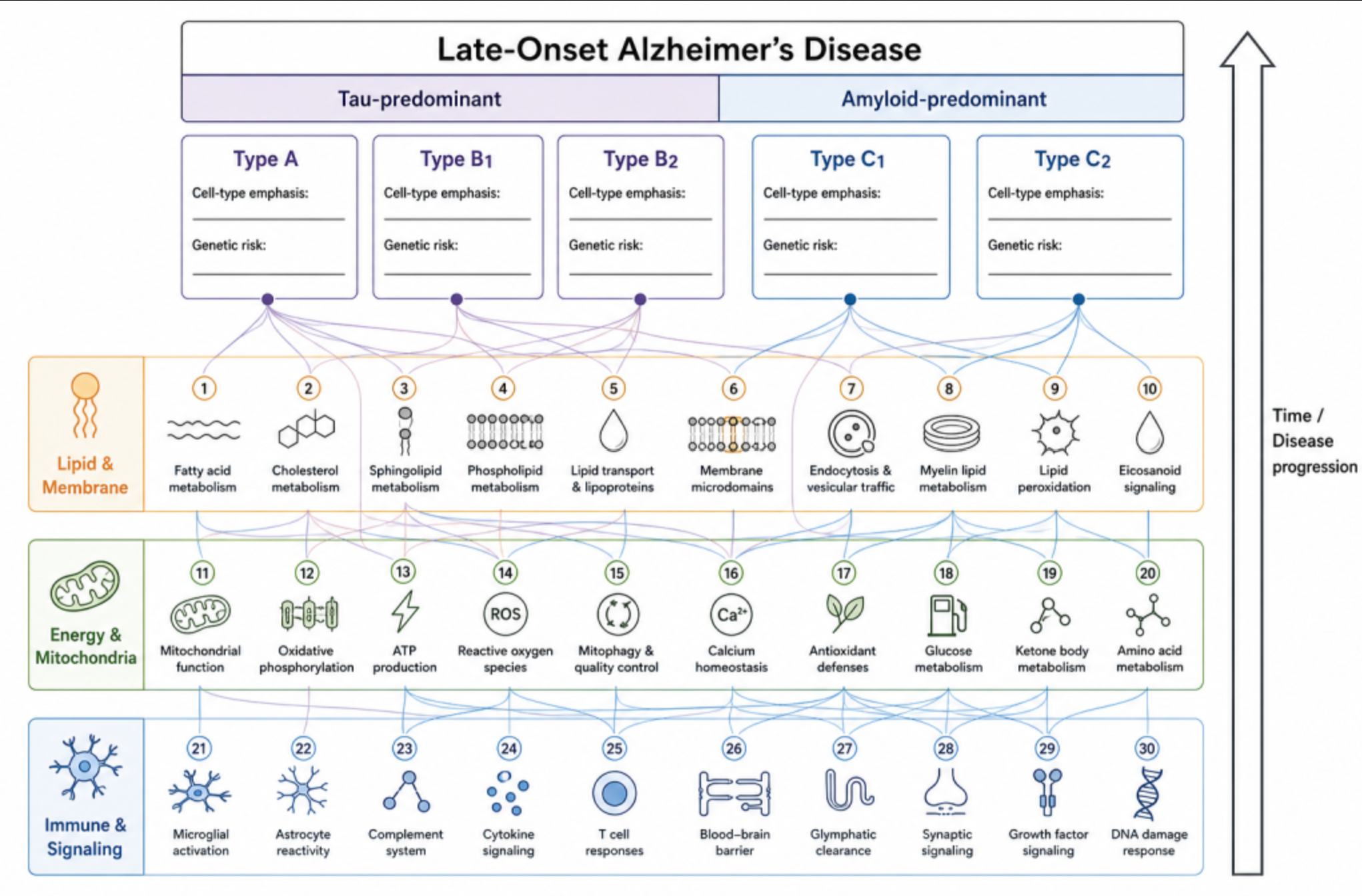
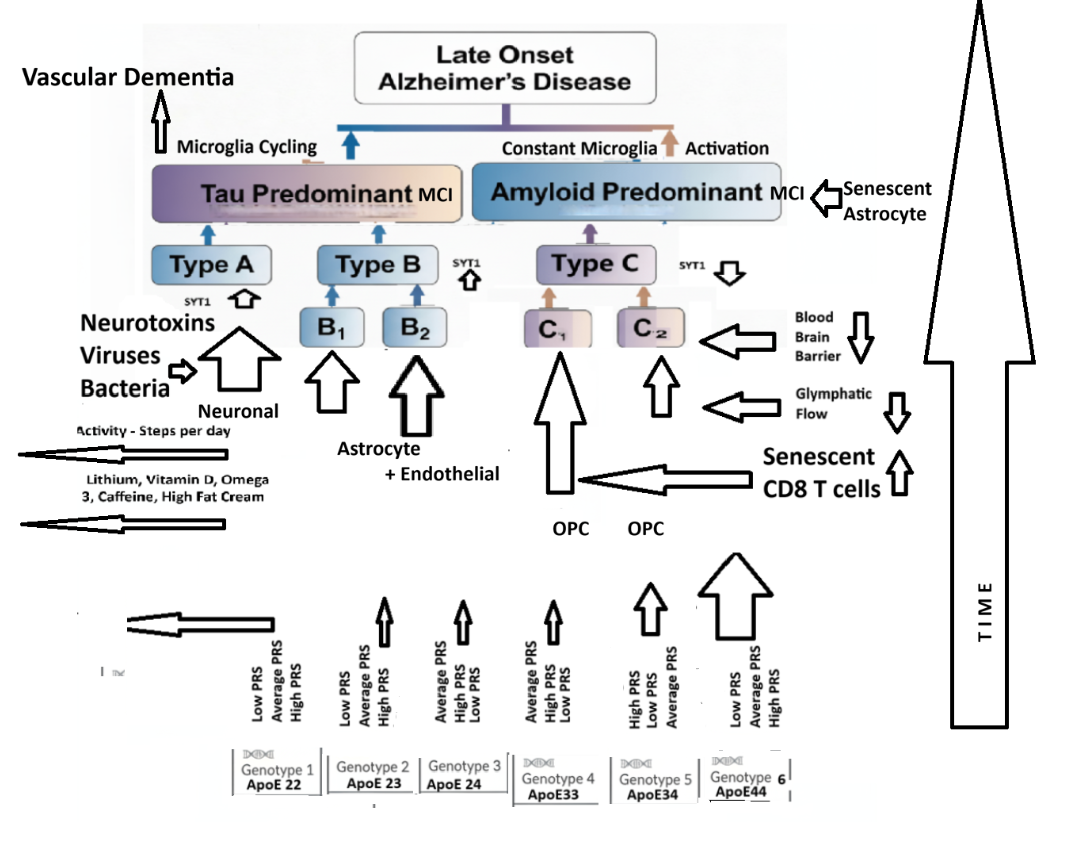
Dr. Carr’s Retrotransposon, Proteostasis, and AutoImmunity Theory for age related mitochondrial dysfunction and neurodegeneration offers a framework for understanding how genomic instability and impaired protein homeostasis may contribute to age-related disease.
Layman’s version of his theory : Alzheimer’s may begin when aging and the ApoE4 gene variant let normally quiet pieces of DNA switch on. They create extra clutter that overwhelms brain cells’ cleanup systems. Damaged proteins pile up, and the immune system sounds an alarm that won’t stop. It may even attack the cells it should protect. Over decades, this cycle could damage memory and thinking. Its a theory that is being evaluated in our longitudinal observational study of ApoE4 carriers.
Late-onset Alzheimer disease is initiated by age – and APOE4- accelerated erosion of heterochromatin based silencing at retrotransposable elements. The resulting derepressed repeat products, include ORF1p and ORF2p proteins, repeat derived neurotoxic and circRNAs, and cytoplasmic/exosomal L1 , SVA, Alu, and HERV/LTR cDNA/RNA . The transcriptionally active transposons impose a multi-front proteostatic and organellar burden that overwhelms neuronal and glial clearance capacity. The resulting collapse of the neuronal 20S/26S proteosome and neuroproteosome, together with decreased CLEAR regulated lysosomal and autophagy -mitophagy systems, permits accumulation of Aged and Aggregating Proteins ( such at tau, APP, alpha synuclein, TDP-43, Fibronectin) along with damaged mitochondria. Sustained cGAS-STING/type I interferon signaling activates senescence programs that further suppress clearance machinery. Transposon RNA transcripts drive the immune, endothelial, and neuro-glial cellular phenotypes associated with the decades long trajectory of Late Onset Alzheimer’s Disease. Resulting non-proteolyzed, Aged and misfolded proteins subsequently contribute to autoreactive senescent CD8 T cells that accelerate aging initiated neurodegeneration.
| Pathway | Biomarkers |
| Neural Network Decay/Dysfunction Loss of Synaptic integrity / loss of Neurotrophic support | NPTXR, PTN (Pleiotrophin), NOTCH1, IGFALS STY1 Cognition – Cognitive Assessment Sensory – Sensory Assessment Motor – Assessment Locus Coerulius – ITC-EEG, Neuromelanin MRI Hippocampal – MRI volumetry Entorhinal Complex– MRI – volumetry |
| Cardio- NeuroVascular Dysfunction Pericyte transition to Myofibroblast secreting fibronectin – Caused by local TGF- beta Brain Barrier Disruption Disruption of Glymphatic Flow decrease during Sleep Arterial stiffness/fibrosis | Syndecan 4 from endothelial/astrocytes in CSF as the earliest CSF biomarker. VEGF-A decreased in Plasma in CN amyloid positive that progressed to tau PET positive. OCT- Retina decreased chorocapillary density in AD Increased aggregated Fibronectin 1 -FN1 deposition at the Neurobasement membrane on ApoE4 carriers- timing not established SVEP1, NDST1, CILP2, ADAMTS13, S100A13 increased GFAP-from Activated Astrocytes |
| Transposon Activity Heterochromatin Methylation, acetylation, proprionation, citrullation, glycation, ubiquination. Retrotransposon Transcription/repression protein factors, piRNA, phosphorylation, lncRNA, miRNA, CircRNA | Retrotransposon RNA biomarkers cDNA Protein biomarkers CircRNA biomarkers Metabolites Stress Granules with circRNA |
| Proteostasis Disruptions Neuroproteosome Proteosome Lysosome Autophagy-ATG3 lipidation system connected to cargo recognition system such as Mitophagy | ASB9, TBCA, NADK, MAP2K2 (MEK2), H2A3 Peptide biomarkers – decreased proteosome proteolysis products altered ubiquination/nedylation products, Protein biomarkers-Aged/Misfolded proteins CircRNA biomarkers– RNA biomarkers – Intracellular ATG3 RNA increases – compensatory? Metabolites Histopathology – Mitochondrial Plaques with de-acidified Lysosomes. |
| Neuroinflammation – Innate and Adaptive Autoimmunity T Cell B Cell Metabolic-Gut-Brain — Monocyte-macrophage | S100A9, IL-18, CHI3L1 (YKL-40), CCL18, sRAGE/AGER, CDCP1, OPG GFAP– Astrocyte Activation Cellular Biomarkers – App specific senescent CD8 T cells with altered glycations causing enhanced stickiness/promiscuous binding and SASP Protein biomarkers CircRNA biomarkers miRNA biomarkers Metabolites mDNA fragments PPY, HAVCR1 (TIM-1), CDON |
| mitochondrial dysfunction Apoptosis-Ferroptosis-Necroptosis- Karyoptosis | VO2 max, Intrinsic Capacity Cellular Biomarkers DNA fragment size biomarkers Protein biomarkers -Caspases CircRNA biomarkers miRNA biomarkers Metabolites |
| Amyloidopathy and Tauopathy | Cellular Biomarkers Protein biomarkers– pTau217, amyloid beta 42/40 CircRNA biomarkers miRNA biomarkers Metabolites |
Pathway mapping: 34 blood circRNAs
Phillips et al., Nat Med 2026. Source paper: https://doi.org/10.1038/s41591-026-04485-5
Assignments based on host-gene function. Genes may map to more than one pathway; primary vs secondary noted.
Evidence key: Grades concern the stated pathway assignment, not diagnostic performance. “Strong host-protein mechanism” does not establish circular-RNA function. “Not independently graded” means the original assignment was preserved without a full evidence audit.
| Pathway / category | circRNA | Rationale / actual pathway | Key source | Evidence strength / limitations |
|---|---|---|---|---|
| Neurovascular interface: endothelial Aβ clearance Added evidence-based category | circPICALM (×2 isoforms) | PICALM protein supports LRP1-dependent Aβ internalization and Rab5/Rab11-mediated endothelial transcytosis. Endothelial deficiency impairs clearance; rescue restores it. This supports a candidate endothelial-clearance link, not a proven circRNA readout of BBB leakage, astrocyte–pericyte dysfunction or the APOE4–FN1 lesion. | Zhao et al., 2015: endothelial mechanism and rescue Storck et al., 2018: independent transport mechanism Kisler et al., 2023: endothelial-PICALM-dependent intervention Phillips et al., 2026: blood circRNA association and source limitations | Strong host-protein mechanism; circRNA interpretation unverified Independent mechanistic support and experimental rescue for endothelial PICALM. Neither circular isoform has been established here as a causal mediator or validated marker of early gliovascular dysfunction. Blood cellular origin and relationship to PICALM protein remain unresolved. |
| Primary cilium | circPCNT | Centrosome / primary cilium | Not provided in document | Direct host-protein evidence; circRNA role unverified Pericentrin supports basal-body recruitment of intraflagellar transport proteins and polycystin-2; depletion inhibits primary-cilium assembly in RPE1 cells. Jurczyk et al., 2004 Circular RNA and Alzheimer disease were not tested. |
| Primary cilium | circCCDC66 | Centrosome / primary cilium | Not provided in document | Direct host-protein evidence; circRNA role unverified CCDC66 supports centriolar-satellite organization, ciliogenesis and BBS4 recruitment to the primary cilium; depletion and rescue experiments support this role in RPE1 cells. Conkar et al., 2017 Circular RNA and Alzheimer disease were not tested. |
| Primary cilium Additional pathway assignment | circSCLT1 | SCLT1 is a centriole distal-appendage component in the CEP83–SCLT1–CEP164/FBF1 assembly hierarchy. SCLT1 depletion disrupts distal-appendage organization and blocks primary-cilium formation in human RPE-1 cells. | Tanos et al., 2013: Centriole distal appendages promote membrane docking, leading to cilia initiation | Direct host-protein evidence; circRNA role unverified Localization and depletion experiments support SCLT1 in ciliogenesis. Circular RNA and Alzheimer disease were not tested. The original synaptic assignment is retained separately, without being revalidated by this cilium study. |
| Proteasomal degradation system | circUBE2K | E2 enzyme assembling K48 polyubiquitin (canonical proteasome tag); ubiquitinates huntingtin | https://www.sciencedirect.com/science/article/abs/pii/S0006291X18322198 | Not independently graded Host-gene assignment retained from the document; circRNA-specific pathway function is not established by this mapping. |
| Proteasomal degradation system | circDDI2 | Aspartyl protease that cleaves/activates NRF1 → proteasome bounce-back response | https://elifesciences.org/articles/18357 | Not independently graded Host-gene assignment retained from the document; circRNA-specific pathway function is not established by this mapping. |
| Proteasomal degradation system | circUBAP2 | UBA-domain ubiquitin binder; recruits ubiquitin machinery | https://www.genecards.org/cgi-bin/carddisp.pl?gene=UBAP2 | Not independently graded Host-gene assignment retained from the document; circRNA-specific pathway function is not established by this mapping. |
| Proteasomal degradation system | circPCMTD1 | Substrate adaptor of Cul5-RING E3 ligase targeting isoAsp-damaged proteins | https://pmc.ncbi.nlm.nih.gov/articles/PMC9875861/ | Not independently graded Host-gene assignment retained from the document; circRNA-specific pathway function is not established by this mapping. |
| Proteasomal degradation system | circZFAND6 | Polyubiquitin-binding zinc finger; TRAF2/TNF signaling & mitophagy | https://pubmed.ncbi.nlm.nih.gov/39811672/ | Host-protein support; context-limited Mitophagy and STING findings were demonstrated in macrophages, not as a circRNA mechanism or early-AD gliovascular marker. Shaikh et al. |
| Lysosomal degradation system | circPICALM (×2 isoforms) | Autophagy–lysosome trafficking; Aβ transcytosis at BBB | https://pubmed.ncbi.nlm.nih.gov/26005850/ | Not independently graded Host-gene assignment retained from the document; circRNA-specific pathway function is not established by this mapping. |
| Lysosomal degradation system | circSCFD1 | SM protein required for autophagosome–lysosome SNARE fusion | https://pubmed.ncbi.nlm.nih.gov/35465820/ | Not independently graded Host-gene assignment retained from the document; circRNA-specific pathway function is not established by this mapping. |
| Lysosomal degradation system | circDNAJC6 | Auxilin; clathrin uncoating; endo-lysosomal function in PD | https://www.nature.com/articles/s41531-025-01162-1 | Not independently graded Host-gene assignment retained from the document; circRNA-specific pathway function is not established by this mapping. |
| Protein aggregation / sequestration | circUBAP2 | Core stress-granule component with G3BP1 | https://pmc.ncbi.nlm.nih.gov/articles/PMC10104854/ | Not independently graded Host-gene assignment retained from the document; circRNA-specific pathway function is not established by this mapping. |
| Protein aggregation / sequestration | circHNRNPM | Splicing factor that co-aggregates with TDP-43 in stress granules | https://pmc.ncbi.nlm.nih.gov/articles/PMC12502245/ | Not independently graded Host-gene assignment retained from the document; circRNA-specific pathway function is not established by this mapping. |
| Protein aggregation / sequestration | circNUP54 | FG-nucleoporin; phase-separates; hijacked in TDP-43/tau aggregates | https://www.med.upenn.edu/shorterlab/MolNeurodegen-2024-Khalil.pdf | Not independently graded Host-gene assignment retained from the document; circRNA-specific pathway function is not established by this mapping. |
| Neuroinflammation | circZFAND6 | TRAF2 / TNF signaling; cGAS-STING type-I IFN | https://pubmed.ncbi.nlm.nih.gov/39811672/ | Host-protein support; context-limited Mitophagy and STING findings were demonstrated in macrophages, not as a circRNA mechanism or early-AD gliovascular marker. Shaikh et al. |
| Neuroinflammation | circQSOX2 | Sensitizes cells to IFN-γ-induced death | https://omim.org/entry/612860 | Not independently graded Host-gene assignment retained from the document; circRNA-specific pathway function is not established by this mapping. |
| Synaptogenesis and repair / removal | circDNAJC6 | Auxilin uncoats synaptic vesicles; SV regeneration | https://pmc.ncbi.nlm.nih.gov/articles/PMC10127800/ | Not independently graded Host-gene assignment retained from the document; circRNA-specific pathway function is not established by this mapping. |
| Synaptogenesis and repair / removal | circEPB41 | 4.1 spectrin-actin scaffold; postsynaptic AMPA/NMDA organization | https://pmc.ncbi.nlm.nih.gov/articles/PMC6782826/ | Not independently graded Host-gene assignment retained from the document; circRNA-specific pathway function is not established by this mapping. |
| Synaptogenesis and repair / removal | circCORO1C | Actin-binding coronin; dendritic-spine plasticity | https://pmc.ncbi.nlm.nih.gov/articles/PMC8869895/ | Not independently graded Host-gene assignment retained from the document; circRNA-specific pathway function is not established by this mapping. |
| Synaptogenesis and repair / removal | circCTCF | AD brains show loss of CTCF binding at synaptic-organization genes | https://www.sciencedirect.com/science/article/pii/S0969996123002073 | Not independently graded Host-gene assignment retained from the document; circRNA-specific pathway function is not established by this mapping. |
| Synaptogenesis and repair / removal | circSCLT1 | Links clathrin to sodium channels; SV endocytic machinery | https://www.ncbi.nlm.nih.gov/gene/132320 | Not independently graded Host-gene assignment retained from the document; circRNA-specific pathway function is not established by this mapping. |
| Synaptogenesis and repair / removal | circASH2L | MLL/COMPASS H3K4 methyltransferase; memory-linked transcription | https://pubmed.ncbi.nlm.nih.gov/16892064/ | Not independently graded Host-gene assignment retained from the document; circRNA-specific pathway function is not established by this mapping. |
| Amyloidogenesis | circPICALM (×2) | APP trafficking, γ-secretase processing, Aβ transcytosis, autophagic Aβ clearance; #3 AD GWAS locus | https://pmc.ncbi.nlm.nih.gov/articles/PMC9776874/ | Not independently graded Host-gene assignment retained from the document; circRNA-specific pathway function is not established by this mapping. |
| Amyloidogenesis | circRANBP9 | Increases BACE1 cleavage of APP → more Aβ; elevated in AD brain | https://pmc.ncbi.nlm.nih.gov/articles/PMC2673255/ | Not independently graded Host-gene assignment retained from the document; circRNA-specific pathway function is not established by this mapping. |
| Amyloidogenesis | circSEC61A1 | ER translocon; APP is translocated through Sec61 | https://pmc.ncbi.nlm.nih.gov/articles/PMC5672155/ | Not independently graded Host-gene assignment retained from the document; circRNA-specific pathway function is not established by this mapping. |
| Amyloidogenesis | circDOP1B (DOPEY2) | chr21 near DSCR; contributes to Down-syndrome APP/amyloid phenotype | https://en.wikipedia.org/wiki/DOP1B | Not independently graded Host-gene assignment retained from the document; circRNA-specific pathway function is not established by this mapping. |
| Tauopathy | circPPP6R3 | Regulatory subunit of PP6 phosphatase; PP-family dephosphorylates tau | https://pmc.ncbi.nlm.nih.gov/articles/PMC11117500/ | Not independently graded Host-gene assignment retained from the document; circRNA-specific pathway function is not established by this mapping. |
| Transposon activity | circCTCF | Silences LINE-1/SINE at insulators; loss derepresses TEs in AD chromatin | https://pmc.ncbi.nlm.nih.gov/articles/PMC509268/ | Not independently graded Host-gene assignment retained from the document; circRNA-specific pathway function is not established by this mapping. |
| Mitochondrial dysfunction | circZFAND6 | TRAF2-dependent mitophagy; restrains cGAS-STING mtDNA sensing | https://pubmed.ncbi.nlm.nih.gov/39811672/ | Host-protein support; context-limited Mitophagy and STING findings were demonstrated in macrophages, not as a circRNA mechanism or early-AD gliovascular marker. Shaikh et al. |
| Mitochondrial dysfunction | circRANBP9 | Cofilin translocation → mitochondrial dysfunction in Aβ toxicity | https://pubmed.ncbi.nlm.nih.gov/22361682/ | Not independently graded Host-gene assignment retained from the document; circRNA-specific pathway function is not established by this mapping. |
| Mitochondrial dysfunction | circFLVCR1 (secondary) | Kennedy pathway → PE (mitochondrial inner-membrane lipid) | https://pmc.ncbi.nlm.nih.gov/articles/PMC11188936/ | Not independently graded Host-gene assignment retained from the document; circRNA-specific pathway function is not established by this mapping. BBB caution: FLVCR2, not FLVCR1, is the major BBB choline transporter identified in Cater et al. |
| Lipid homeostasis | circMBOAT2 (×2 isoforms) | Lands-cycle acyltransferase; lyso-PE/PC remodeling; ferroptosis suppressor | https://pmc.ncbi.nlm.nih.gov/articles/PMC10330611/ | Not independently graded Host-gene assignment retained from the document; circRNA-specific pathway function is not established by this mapping. |
| Lipid homeostasis | circFLVCR1 | Choline/ethanolamine importer feeding Kennedy pathway (PC/PE synthesis) | https://pmc.ncbi.nlm.nih.gov/articles/PMC11188936/ | Not independently graded Host-gene assignment retained from the document; circRNA-specific pathway function is not established by this mapping. BBB caution: FLVCR2, not FLVCR1, is the major BBB choline transporter identified in Cater et al. |
| Outside the 12-pathway list (flagged for possible schema expansion) | circGPATCH1 | Pre-mRNA splicing QC (DHX15 co-factor) | Not provided in document | Not independently graded Original host-gene annotation; no supporting source supplied in the document. |
| Outside the 12-pathway list (flagged for possible schema expansion) | circKHDC4 | Pre-mRNA splicing (PRP19 complex) | Not provided in document | Not independently graded Original host-gene annotation; no supporting source supplied in the document. |
| Outside the 12-pathway list (flagged for possible schema expansion) | circSWT1 | Nuclear mRNP surveillance ribonuclease | Not provided in document | Not independently graded Original host-gene annotation; no supporting source supplied in the document. |
| Outside the 12-pathway list (flagged for possible schema expansion) | circSMC1A | Cohesin / 3D genome organization | Not provided in document | Not independently graded Original host-gene annotation; no supporting source supplied in the document. |
| Outside the 12-pathway list (flagged for possible schema expansion) | circLIN54 | Cell-cycle / DREAM complex / senescence | Not provided in document | Not independently graded Original host-gene annotation; no supporting source supplied in the document. |
| Outside the 12-pathway list (flagged for possible schema expansion) | circN4BP2L2 | Transcriptional co-repressor, hematopoietic | Not provided in document | Not independently graded Original host-gene annotation; no supporting source supplied in the document. |
| Outside the 12-pathway list (flagged for possible schema expansion) | circELF2 | ETS TF for B/T-cell development (note: distinct from CELF2) | Not provided in document | Not independently graded Original host-gene annotation; no supporting source supplied in the document. |
| Outside the 12-pathway list (flagged for possible schema expansion) | circFLACC1 (ALS2CR12) | Testis-restricted coiled-coil; brain %ile = 0 in CircAtlas; possible spurious/peripheral hit | Not provided in document | Not independently graded Original host-gene annotation; no supporting source supplied in the document. |
Cholesterol homeostasis: No confident panel member.
Insulin / IGF activity: No confident panel member.