Multiple hit theory for the pathogenesis of AD
The multiple hit theory of Alzheimer’s disease (AD) proposes that no single factor is sufficient to cause the disease; instead, AD emerges when several partially independent “hits” converge over time on vulnerable neural networks to push the system past a tipping point into irreversible neurodegeneration.[1][2][3]
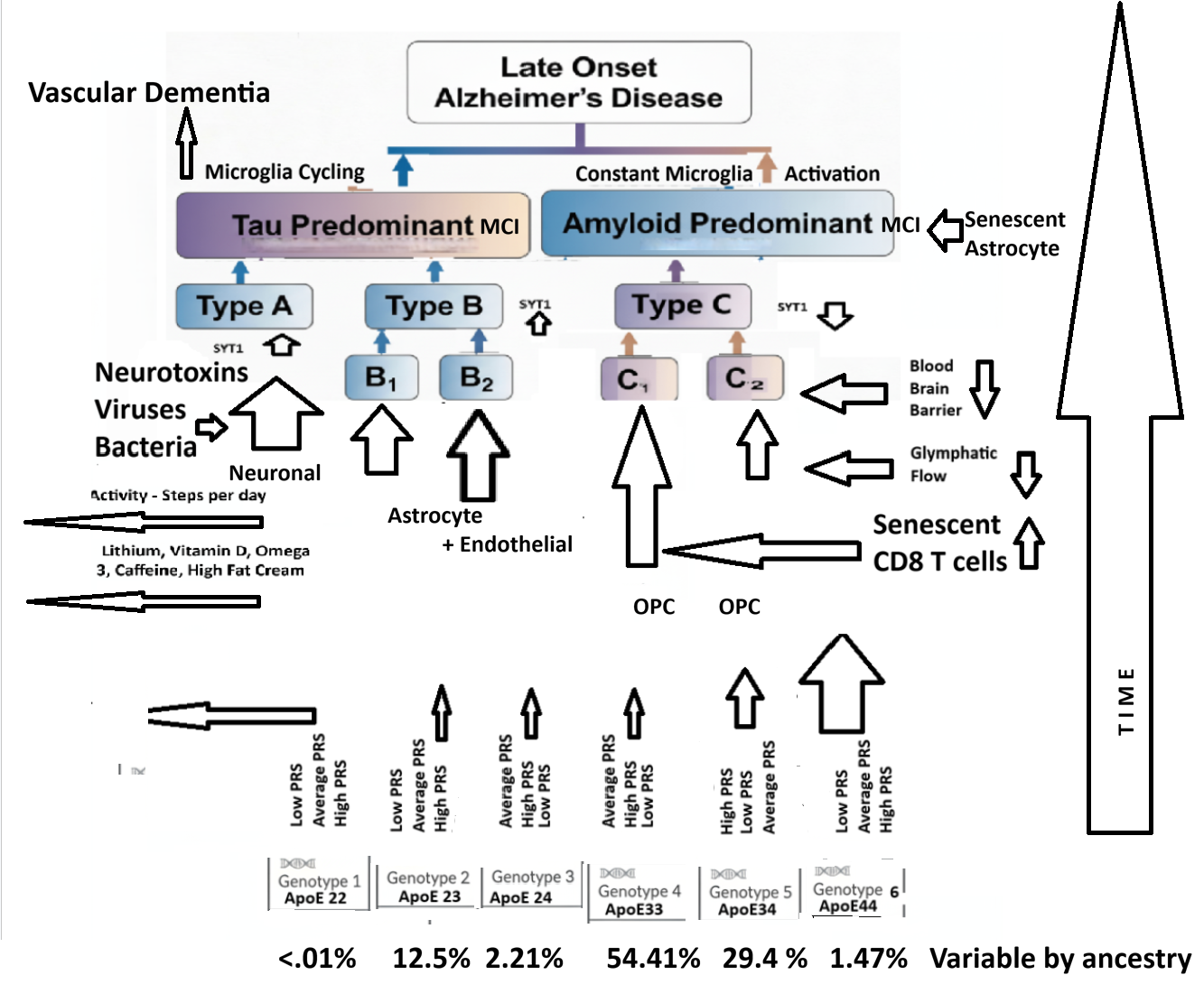
In this framework, “hits” can be genetic, metabolic, vascular, inflammatory, infectious, or traumatic, and each one alone may only produce compensated or subclinical damage. A first hit establishes a vulnerable state (for example, lifelong APOE4-related lipid dysregulation and impaired Aβ clearance), while subsequent hits such as chronic systemic inflammation, recurrent infections, or traumatic brain injury (TBI) amplify protein misfolding, synaptic injury, and network failure until clinical symptoms appear.[2][3][4][5][1]
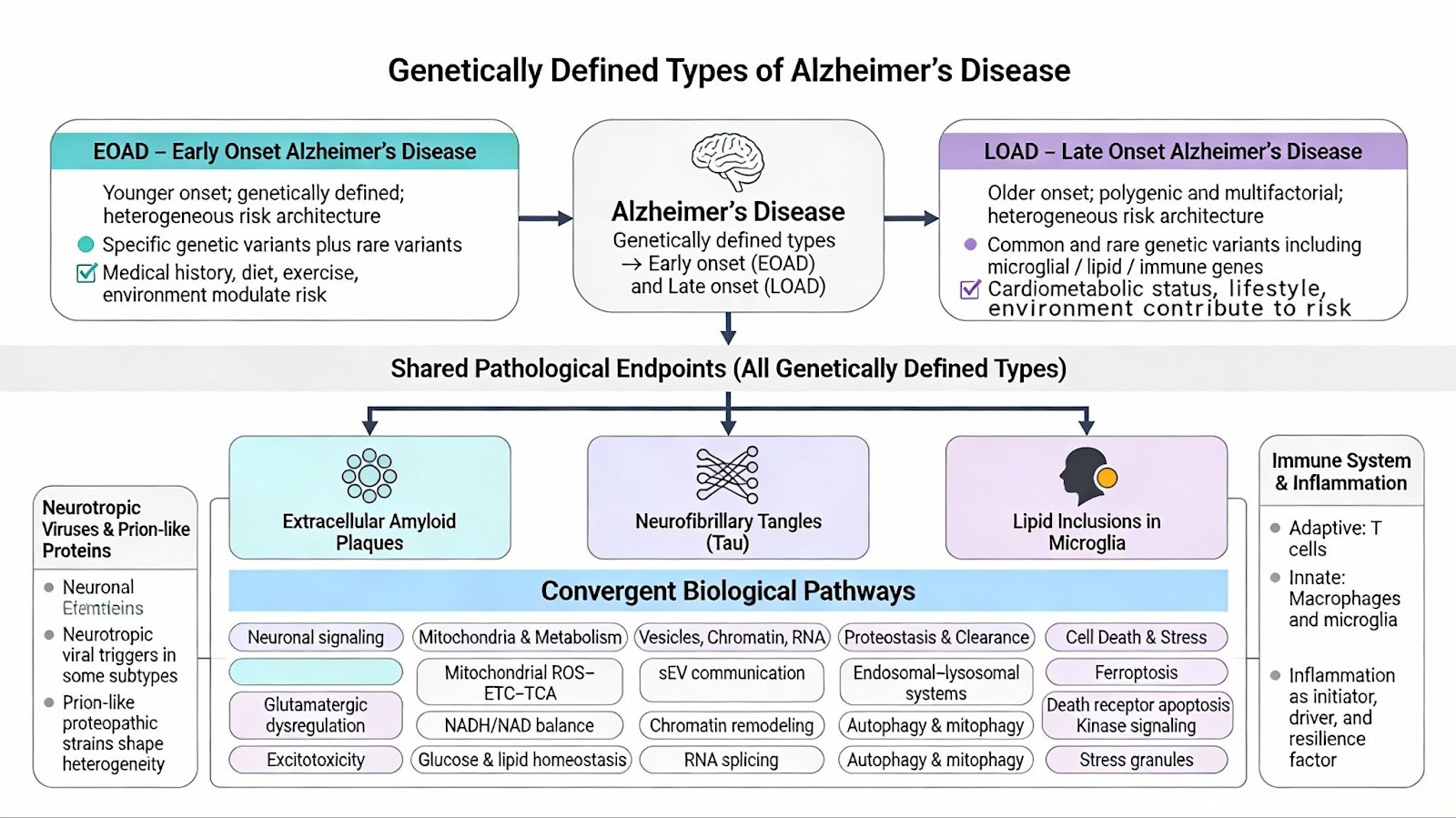
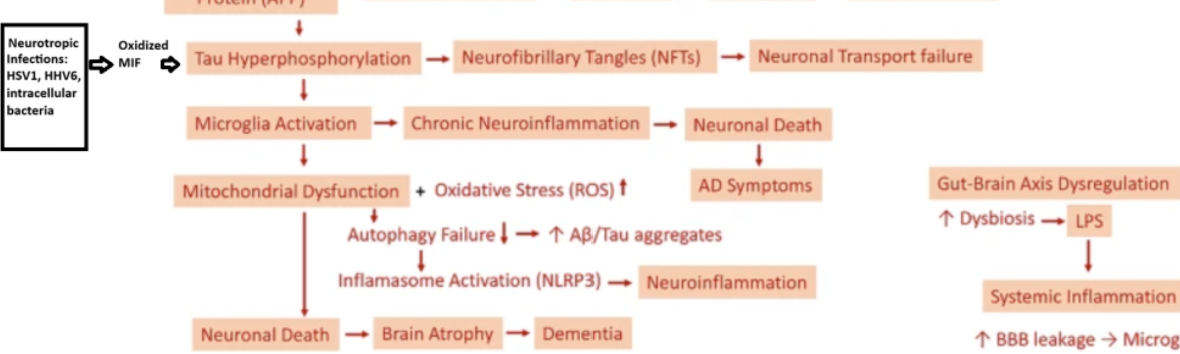
On the molecular level, early oxidative stress and mitochondrial dysfunction have been framed as one “hit,” with downstream cell-cycle and metabolic dysregulation as a second necessary component that together drive tau pathology and neuronal death in the classic AD two‑hit hypothesis. Beyond this, chronic microglial and astrocyte activation, failure to resolve inflammation, and accumulation of damage-associated molecular patterns form additional hits that create self-sustaining inflammatory loops, promoting amyloid deposition and tau phosphorylation even after the initial triggers have waned.[6][3][7][8]
Environmental and systemic hits
Epidemiological and experimental data link TBI, midlife vascular risk factors, and recurrent infections to a higher incidence of late-life dementia, consistent with a cumulative, multi-hit model. For example, TBI produces long-lasting microglial activation, white matter damage, and network dysfunction, which may later interact with age-related Aβ and tau pathology to increase dementia risk; similarly, chronic systemic inflammation from metabolic syndrome or periodontitis can propagate to the brain and aggravate existing amyloid and tau lesions.[3][4][5][8][2]
Infection and immune “multi-hit” hypothesis
A growing body of work suggests that repeated or combined CNS exposures to pathogens (such as HSV‑1 and other microbes) may act as serial hits: each episode induces innate immune activation and Aβ deposition as an antimicrobial response, but over decades this can drive excessive amyloidosis and neuroinflammation. In this view, compromised or dysregulated peripheral immunity, trained innate immune states, and impaired clearance of pathogens or debris further load the system with hits, eventually overwhelming compensatory mechanisms and accelerating neurodegeneration.[9][10][11][1]
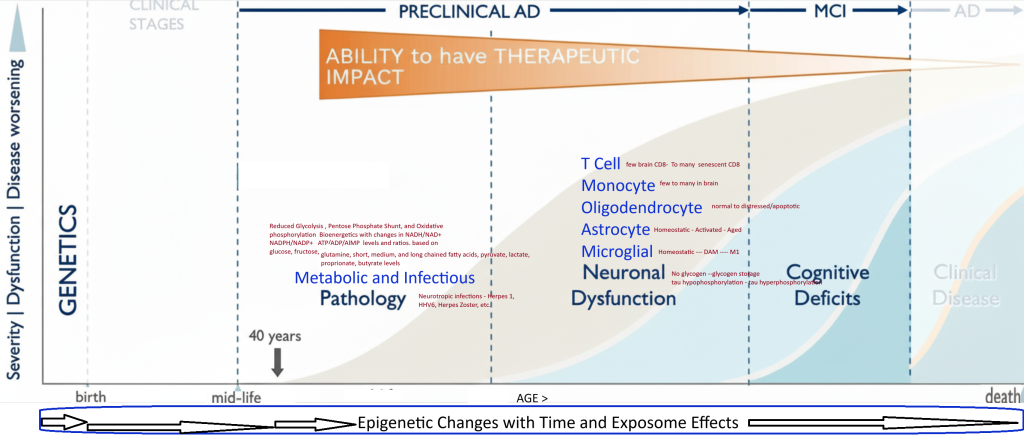
A useful way to visualize the multiple hit theory is as a progressively overloaded bridge. One pillar (e.g., genetic susceptibility such as APOE4) is weakened from birth but the bridge still carries traffic. Over time, additional stressors—repeated inflammatory “storms” from infections, chronic vascular strain, and occasional structural shocks like TBI—each add cracks or remove cables; eventually, a final modest stressor (for example, a bout of systemic illness or anesthesia) causes the bridge to fail, corresponding to the transition from preclinical pathology to symptomatic AD.[10][4][1][2]
- Zhu X et al. “Alzheimer’s disease: the two-hit hypothesis.” Lancet Neurol, 2004.[6]
- Zhu X et al. “Alzheimer disease, the two-hit hypothesis: an update.” Biochim Biophys Acta, 2007.[7]
- Patrick KL & Smith TD. “Exploring the ‘Multiple-Hit Hypothesis’ of neurodegenerative disease.” Front Cell Infect Microbiol, 2019.[12][1]
- Naughton SX et al. “The viral hypothesis in Alzheimer’s disease: novel insights and pathophysiological features.” Front Mol Biosci, 2020.[9]
- Cognacq G et al. “Traumatic Brain Injury and Alzheimer’s Disease: A Shared Pathophysiology.” 2025.[4]
- Zhang J et al. “Recent advances in Alzheimer’s disease: mechanisms, diagnosis and treatment.” Signal Transduct Target Ther, 2024.[2]
- Wang J et al. “Role of neuroinflammation in neurodegeneration development.” Signal Transduct Target Ther, 2023.[3]
- https://pmc.ncbi.nlm.nih.gov/articles/PMC6546885/
- https://www.nature.com/articles/s41392-024-01911-3
- https://www.nature.com/articles/s41392-023-01486-5
- https://pmc.ncbi.nlm.nih.gov/articles/PMC11926848/
- https://pmc.ncbi.nlm.nih.gov/articles/PMC1173459/
- https://pubmed.ncbi.nlm.nih.gov/15039034/
- https://pubmed.ncbi.nlm.nih.gov/17142016/
- https://onlinelibrary.wiley.com/doi/10.1155/2018/1972714
- https://pmc.ncbi.nlm.nih.gov/articles/PMC7563893/
- https://www.nature.com/articles/d41586-025-01104-0
- https://www.sciencedirect.com/science/article/pii/S0925443922001004
- https://www.frontiersin.org/journals/cellular-and-infection-microbiology/articles/10.3389/fcimb.2019.00138/full
- https://taylorandfrancis.com/knowledge/Medicine_and_healthcare/Oncology/Two-hit_hypothesis/
- https://www.thetransmitter.org/spectrum/multiple-hits-theory-autism-explained/
- https://medicine.iu.edu/blogs/neuroscience/traumatic-brain-injury-and-alzheimer
- https://www.frontiersin.org/journals/neuroscience/articles/10.3389/fnins.2020.00376/full
- https://en.wikipedia.org/wiki/Two-hit_hypothesis
- https://jnnp.bmj.com/content/90/11/1221
- https://www.science.org/doi/10.1126/science.adx0043
- https://www.foxchase.org/about-us/history/discoveries-fox-chase-research/knudsons-two-hit-theory-cancer-causation
| Model / Hypothesis | Initiating Cells/Mechanisms | Key Molecular Events | Evidence / Notes | Example References |
|---|---|---|---|---|
| 1. Neuronal ApoE4 & Microglia Co-conspirator | Neurons (ApoE4) & Microglia | ApoE4-dependent neuronal vulnerability, microglial activation, neuroinflammation | Microglia depletion reduces neuronal ApoE4 pathology; CSF1R inhibitors block pathology | PubMed;Nature 2019;Wiley 2023;Brain;Cell Stem Cell 2025 |
| 2. Microglia–Astrocyte Crosstalk | Microglia, Astrocytes | Inflammatory signaling loops, glial-neurovascular dysfunction | Bidirectional glial communication drives chronic disease | PNAS |
| 3. Neuron First – Neurogenesis/ROS/SGs | Neurons | Early oxidative stress, stress granule (SG) assembly, halted neurogenesis | Stress granules, TDP-43 mislocalization precede visible amyloid/tau pathology | PMC 12084003;Frontiers;Telemedical |
| 4. Microglia First (Neuroinflammation) | Microglia | Chronic microglial activation, sustained neuroinflammation | Microglia depletion impairs disease progression, Notch/PI3K-Akt dysregulation | PMC11438337 |
| 5. Astrocyte First Model | Astrocytes | Early reactive transformation, GABA/H₂O₂ secretion, altered synaptic modulation | Astrocyte transcriptomic and secretory changes linked to AD | MSN;Nature 2024 |
| 6. Oligodendrocyte First | Oligodendrocytes | Senescence, loss of myelination, infection/injury-induced dysfunction | White matter, myelin, and oligodendrocyte pathology precede AD onset in some models | PMC11569602 |
| 7. Virus-Activated Transposable Elements | Neurons, glia | HSV/EBV/other viruses trigger transposable element activation, protein aggregation | HSV-1/TE activation disrupts tau/amyloid pathways, chronic inflammation | Cleveland Clinic |
| 8. Ribosome First Model | All Cells | |||
| 9. Circular RNA – First | All Cells | |||
| 10. Exosome or Ectosome First | All Cells | |||
| 11. Metabolism First – lack of intestinal microbial provision of butryate, ferulic acid , and Short Chained Fatty Acids | Brain Tissue | |||
| 12. Senescent CD8 Tcell Model of AD |