Start the creation of a personal digital twin by uploading your VCF DNA sequence file and then choosing our digital twin app which incorporates your current medical record.
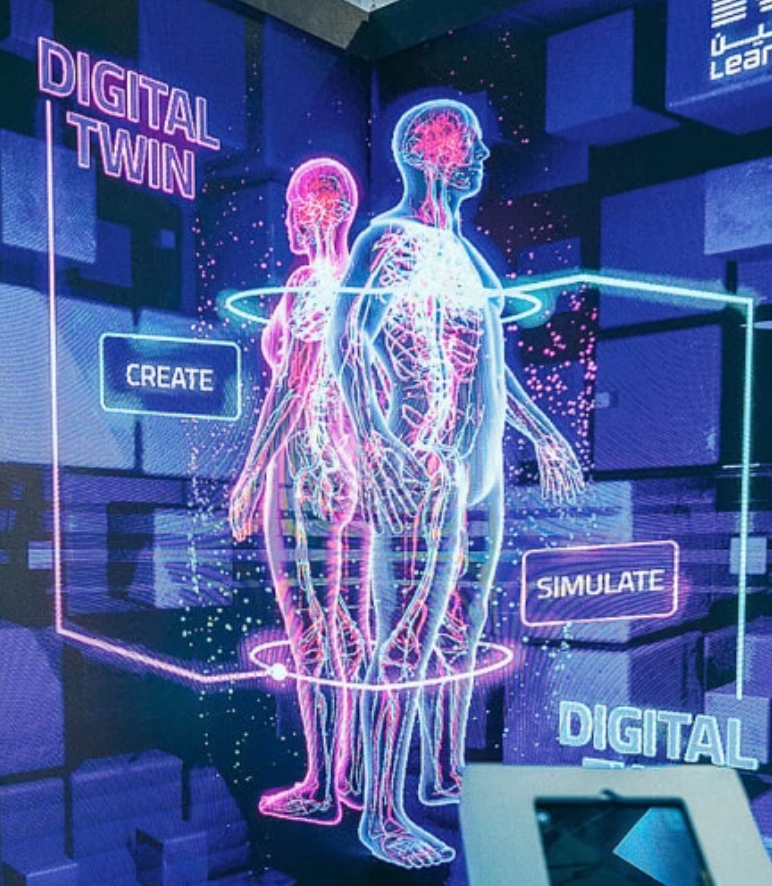
The concept of a digital twin in healthcare refers to creating a highly detailed, dynamic virtual model of an individual patient, organ, physiological system, or even their entire body. Unlike general digital twins, a patient digital twin is built to reflect not just broad physical behaviors or outcomes, but also the unique, real-time characteristics of that specific patient’s health, integrating data from a variety of sources such as electronic health records, wearables, genomics, molecular markers, and environmental factors.
How It Works
- The digital twin of a patient continuously receives and updates with real-life data, allowing it to simulate health status, predict disease progression, and optimize or even individualize diagnostics and treatment options.
- These twins can be used for “what if” simulations—testing potential treatment strategies before applying them in real life, and monitoring health changes as they occur.
- There are two primary types:
Benefits in Healthcare
- Personalized medicine: Enables highly individualized care through constant integration and analysis of multimodal patient data.
- Predictive analytics: Supports early detection, prognosis, and preventive interventions by identifying patterns and potential health risks before symptoms occur.
- Improved decision making: Assists clinicians in making better diagnostic and treatment choices, and even allows for virtual clinical trials tailored to a patient’s personal health profile.
- Patient empowerment: Patients can access and interact with their digital twin data, leading to more engagement and shared decision-making.
Data & Technology
- Patient digital twins rely on advanced analytics, real-time data integration, IoT devices, AI, and simulation platforms to reflect the current and projected states of the patient.
- Privacy, data ownership, and clinical validation are critical requirements for practical deployment and ethical management.
In summary, a patient digital twin is an evolution of the foundational digital twin concept—serving as a personalized, living virtual representation of an individual’s health, with applications in risk prediction, diagnosis, prevention, and precision medicine.