![["What You Need To Know About (tm)" Logo]](htimages/wyntkaTM.jpg)

| Melanoma |
![[National Cancer Institute Logo]](htimages/ncilogo_nobar.gif)
|
|
![[Shaded Blue Bar]](htimages/blue_heading_bar.gif) Updated: 10/21/98 |
||
![[Item:]](htimages/blue_bullet.gif) IntroductionWhat Is Melanoma?The SkinMelanocytes and MolesCancerMelanomaSigns and Symptoms of MelanomaDiagnosis and StagingTreatmentGetting a Second OpinionPreparing for TreatmentMethods of TreatmentClinical TrialsSide Effects of TreatmentNutrition for Cancer PatientsFollowup CareRecovery and OutlookSupport for People with CancerCauses, Risk Factors, and PreventionOther BookletsBooklets About Skin ConditionsBooklets About Cancer TreatmentsBooklets About Living With CancerHow To Do a Skin Self-ExamNational Cancer Institute Information ResourcesGlossary
IntroductionWhat Is Melanoma?The SkinMelanocytes and MolesCancerMelanomaSigns and Symptoms of MelanomaDiagnosis and StagingTreatmentGetting a Second OpinionPreparing for TreatmentMethods of TreatmentClinical TrialsSide Effects of TreatmentNutrition for Cancer PatientsFollowup CareRecovery and OutlookSupport for People with CancerCauses, Risk Factors, and PreventionOther BookletsBooklets About Skin ConditionsBooklets About Cancer TreatmentsBooklets About Living With CancerHow To Do a Skin Self-ExamNational Cancer Institute Information ResourcesGlossary
Introduction
![[Blue Underline]](htimages/blue_line.gif)
Melanoma is the most serious cancer of the skin. In some parts of the world, especially among Western countries, the number of people who develop melanoma is increasing faster than any other cancer. In the United States, for example, the incidence rate of melanoma has more than doubled in the past 20 years. The National Cancer Institute (NCI) has written this booklet to help people with melanoma and their families and friends better understand this disease. We hope others will read it as well to learn more about melanoma.
This booklet discusses prevention strategies, detection, symptoms, diagnosis, treatment, and followup care. It also has information about resources and sources of support to help patients cope with melanoma.
Two more common and less serious types of skin cancer, squamous cell and basal cell cancer, are discussed in another NCI booklet, What You Need To Know About™ Skin Cancer. This and other NCI booklets are listed in the Other Booklets section.
Cancer research has led to real progress against cancer--better survival and an improved quality of life. Through research, our knowledge about melanoma and other cancers keeps increasing. We are finding new ways to detect and treat melanoma. The Cancer Information Service (CIS) and other NCI resources listed under the National Cancer Institute Information Resources section can provide the latest, most accurate information on melanoma. To order this publication, call the Cancer Information Service toll free at 1-800-4-CANCER (1-800-422-6237).
Words that may be new to readers are printed in italics. Definitions of these and other
terms related to melanoma are listed in the Glossary section. For some words, a "sounds-like" spelling also is given.
![[Blue Arrow to Top of Page]](htimages/arrow.gif)
What Is Melanoma?
Melanoma is a type of skin cancer. It begins in certain cells in the skin called
melanocytes. To understand melanoma, it is helpful to know about the skin and about melanocytes--what
they do, how they grow, and what happens when they become cancerous.
The Skin
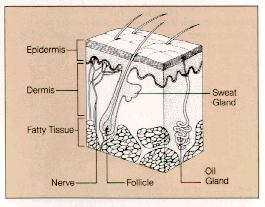
The skin is the body's largest organ. It protects us against heat, sunlight, injury, and infection. It helps regulate body temperature, stores water and fat, and produces vitamin D. The skin has two main layers: the outer epidermis and the inner dermis.
The epidermis is mostly made up of flat, scalelike cells called squamous cells. Round cells called basal cells lie under the squamous cells in the epidermis. The lower part of the epidermis also contains melanocytes.
The dermis contains blood vessels, lymphatic vessels, hair follicles, and glands. Some of these glands produce sweat, which helps regulate body temperature, and some produce sebum, an oily substance that helps keep the skin from drying out. Sweat and sebum reach the skin's surface through tiny openings called pores.
Melanocytes and Moles
Melanocytes are spread throughout the lower part of the epidermis. They produce melanin, the pigment that gives our skin its natural color. When skin is exposed to the sun, melanocytes produce more pigment, causing the skin to tan, or darken.
Sometimes, clusters of melanocytes and surrounding tissue form benign
(noncancerous) growths called moles. (Doctors also call a mole a nevus; the plural is nevi.) Moles are very common. Most people have between 10 and 40 of these flesh-colored, pink, tan, or
brown areas on the skin. Moles can be flat or raised. They are usually round or oval and smaller
than a pencil eraser. They may be present at birth or may appear later on--usually before age 40.
Moles generally grow or change only slightly over a long period of time. They tend to
fade away in older people. When moles are surgically removed, they normally do not return.
Cancer
Cancer is actually a group of many different diseases. What all cancers have in common is that each type develops from our normal cells, the body's basic unit of life. To understand cancer it is helpful to know how cancer cells are different from normal cells.
The body is made up of many types of cells. Normally cells grow, divide, and produce more cells to keep the body healthy and functioning properly. Sometimes, however, the process goes astray--cells keep dividing when new cells are not needed. The mass of extra cells forms a growth or tumor. Tumors can be benign or malignant.
- Benign tumors are not cancer. They often can be removed and, in most cases, they do not
come back. Cells in benign tumors do not spread to other parts of the body. Most importantly,
benign tumors are rarely a threat to life.
- Malignant tumors are cancer. Cells in malignant tumors are abnormal and divide without control or order. These cancer cells can invade and destroy the tissue around them. Cancer cells can also break away from a malignant tumor and enter the bloodstream or lymphatic system (the tissues and organs that produce and store cells that fight infection and disease). This process, called metastasis, is how cancer spreads from the original tumor to form new tumors in other parts of the body. When cancer spreads (metastasizes) to another part of the body, the new tumor has the same kind of abnormal cells and the same name as the original tumor.
Melanoma
Melanoma occurs when melanocytes (pigment cells) become malignant. Most pigment cells are in the skin; when melanoma starts in the skin, the disease is called cutaneous melanoma. Melanoma may also occur in the eye and is called ocular melanoma or intraocular melanoma. Rarely, melanoma may arise in the meninges, the digestive tract, lymph nodes, or other areas where melanocytes are found. Melanomas arising in areas other than the skin are not discussed in this booklet. (This booklet focuses on melanoma that begins in the skin. The Cancer Information Service can provide more specific information about intraocular melanoma and its treatment.)
Melanoma can occur on any skin surface. In men, it is often found on the trunk (the area from the shoulders to the hips) or the head and neck. In women, melanoma often develops on the lower legs. Melanoma is rare in black people and others with dark skin. When it does develop in dark-skinned people, it tends to occur under the fingernails or toenails or on the palms or soles. The chance of developing melanoma increases with age, but this disease affects people of all age groups. Melanoma is one of the most common cancers in young adults.
When melanoma spreads, cancer cells are also found in the lymph nodes (sometimes
called lymph glands). If the cancer has reached the lymph nodes, it may mean that cancer cells
have spread to other parts of the body such as the liver, lungs, or brain. In such cases, the
cancer cells in the new tumor are still melanoma cells, and the disease is called metastatic
melanoma rather than liver, lung, or brain cancer.
Signs and Symptoms of Melanoma
Often, the first sign of melanoma is a change in the size, shape, color, or feel of an existing mole. Most melanomas have a black or blue-black area. Melanoma also may appear as a new, black, abnormal, or "ugly-looking" mole.
If you have a question or concern about something on your skin, do not use these pictures to try to diagnose it yourself. Pictures are useful examples, but they cannot take the place of a doctor's examination.
Thinking of "ABCD" can help you remember what to watch for:
- Asymmetry--The shape of one half does not match the other.

- Border--The edges are often ragged, notched, blurred, or irregular in outline; the pigment
may spread into the surrounding skin.

- Color--The color is uneven. Shades of black, brown, and tan may be present. Areas of
white, grey, red, pink, or blue also may be seen.

- Diameter--There is a change in size, usually an increase. Melanomas are usually larger than
the eraser of a pencil (5 mm or 1/4 inch).

Melanomas can vary greatly in the ways they look. Many show all of the ABCD features. However, some may show changes or abnormalities in only one or two of the ABCD features.

Early melanomas may be found when a pre-existing mole changes slightly--such as forming a new black area. Other frequent findings are newly formed fine scales or itching in a mole. In more advanced melanoma, the texture of the mole may change. For example, it may become hard or lumpy. Although melanomas may feel different and more advanced tumors may itch, ooze, or bleed, melanomas usually do not cause pain.
Melanoma can be cured if it is diagnosed and treated when the tumor is thin and has not deeply invaded the skin. However, if a melanoma is not removed at its early stages, cancer cells may grow downward from the skin surface, invading healthy tissue. When a melanoma becomes thick and deep, the disease often spreads to other parts of the body and is difficult to control.
A skin examination is often part of a routine checkup by a doctor, nurse specialist, or nurse practitioner. People also can check their own skin for new growths or other changes. (The How To Do a Skin Self-Exam section has a simple guide on how to do a skin self-exam.) Changes in the skin or a mole should be reported to the doctor or nurse without delay. The person may be referred to a dermatologist, a doctor who specializes in diseases of the skin.
People who have had melanoma have a high risk of developing a new melanoma. Also, those with relatives who have had this disease have an increased risk. Doctors may advise people at risk to check their skin regularly and to have regular skin exams by a doctor or nurse specialist.
Some people have certain abnormal-looking moles, called dysplastic nevi or atypical moles, that may be more likely than normal moles to develop into melanoma. Most people with dysplastic nevi have just a few of these abnormal moles; others have many. They and their doctor should examine these moles regularly to watch for changes. (Additional information about moles and dysplastic nevi and melanoma risk is available in the NCI booklet What You Need To Know About™ Moles and Dysplastic Nevi.)
Dysplastic nevi often look very much like melanoma. Doctors with special training in skin diseases are in the best position to decide whether an abnormal-looking mole should be closely watched or should be removed and checked for cancer.
In some families, many members have a large number of dysplastic nevi, and some have
had melanoma. Members of these families have a very high risk for melanoma. Doctors
often recommend that they have frequent checkups (every 3 to 6 months) so that any problems
can be detected early. The doctor may take pictures of a person's skin to help in detecting
any changes that occur.
Diagnosis and Staging
If the doctor suspects that a spot on the skin is melanoma, the patient will need to have a biopsy. A biopsy is the only way to make a definite diagnosis. In this procedure, the doctor tries to remove all of the suspicious-looking growth. If the growth is too large to be removed entirely, the doctor removes a sample of the tissue. A biopsy can usually be done in the doctor's office using a local anesthetic. A pathologist then examines the tissue under a microscope to check for cancer cells. Sometimes it is helpful for more than one pathologist to look at the tissue to determine whether melanoma is present.
A person who needs a biopsy may want to ask the doctor some of the following questions:
|
If melanoma is found, the doctor needs to learn the extent, or stage, of the disease before planning treatment. The treatment plan takes into account the location and thickness of
the tumor, how deeply the melanoma has invaded the skin, and whether melanoma cells
have spread to nearby lymph nodes or other parts of the body. Removal of nearby lymph nodes
for examination under a microscope is sometimes necessary. (Such surgery may be
considered part of the treatment because removing cancerous lymph nodes may help control the disease.)
The doctor also does a careful physical exam and, depending on the thickness of the
tumor, may order chest x-rays; blood tests; and scans
of the liver, bones, and brain.
Treatment
After diagnosis and staging, the doctor develops a treatment plan to fit each patient's needs. Treatment for melanoma depends on the extent of the disease, the patient's age and general health, as well as other factors.
People with melanoma are often treated by a team of specialists, which may include a dermatologist, surgeon, medical oncologist, and plastic surgeon. The standard treatment for melanoma is surgery; in some cases, doctors may also use chemotherapy, biological therapy, or radiation therapy. The doctors may decide to use one treatment method or a combination of methods.
Some patients take part in a
clinical trial, which is a research study using new
treatment methods. Such trials are designed to improve cancer treatment. (The Clinical Trials
section has more information about
clinical trials.)
Getting a Second Opinion
Before starting treatment, the patient may want a second specialist to review the diagnosis and treatment plan. It may take a week or two to arrange for a second opinion. A short delay will not reduce the chance that treatment will be successful. Some insurance companies require a second opinion; many others will cover a second opinion if the patient requests it.
There are a number of ways to find a doctor who can give a second opinion:
- One doctor may refer the patient to another who has special interest and training in
treating melanoma.
- The Cancer Information Service, at 1-800-4-CANCER, can tell callers about treatment
facilities, including cancer centers and other programs supported by the National Cancer Institute.
- Patients can get the names of doctors from their local medical society, a nearby hospital, or
a medical school.
- The Official ABMS Directory of Board Certified Medical Specialists lists doctors' names along with their specialty and their background. This resource is in most public libraries.
Preparing for Treatment
Many people with cancer want to learn all they can about their disease and their treatment choices so they can take an active part in decisions about their medical care. When a person is diagnosed with cancer, shock and stress are natural reactions. These feelings may make it difficult for patients to think of everything they want to ask the doctor. Often, it helps to make a list of questions. To help remember what the doctor says, patients may take notes or ask whether they may use a tape recorder. Some people also want to have a family member or friend with them when they talk to the doctor--to take part in the discussion, to take notes, or just to listen.
These are some questions a patient may want to ask the doctor before treatment begins:
|
Patients do not need to ask all their questions or remember all the answers at one time.
They will have other chances to ask the doctor to explain things and to get more information.
Methods of Treatment
Surgery to remove (excise) a melanoma is the standard treatment for this disease. It is necessary to remove not only the tumor but also some normal tissue around it in order to minimize the chance that any cancer will be left in the area.
The width and depth of surrounding skin that needs to be removed depends on the thickness of the melanoma and how deeply it has invaded the skin. In cases in which the melanoma is very thin, enough tissue is often removed during the biopsy, and no further surgery is necessary. If the melanoma was not completely removed during the biopsy, the doctor also takes out the remaining tumor. In most cases, additional surgery is performed to remove normal-looking tissue around the tumor to make sure all melanoma cells are removed. This is necessary, even for thin melanomas, to provide adequate surgical margins around the removed tumors. For thick melanomas, it may be necessary to do a wider excision to take out a larger margin of tissue.
If a large area of tissue is removed, a skin graft may be done at the same time. For this procedure, the doctor uses skin from another part of the body to replace the skin that was removed.
Lymph nodes near the tumor may be removed during surgery because cancer can spread through the lymphatic system. If the pathologist finds cancer cells in the lymph nodes, it may mean that the disease has spread to other parts of the body.
Surgery is generally not effective in controlling melanoma that is known to have spread to other parts of the body. In such cases, doctors may use other methods of treatment, such as chemotherapy, biological therapy, radiation therapy, or a combination of these methods. When therapy is given after surgery (primary therapy), the treatment is called adjuvant therapy. The goal of adjuvant therapy is to kill any undetected cancer cells that may remain in the body.
Chemotherapy is the use of anticancer drugs to kill cancer cells. It is generally a systemic treatment, meaning that it can affect cancer cells throughout the body. In chemotherapy, one or more anticancer drugs are given by mouth or by injection into a vein (intravenous). Either way, the drugs enter the bloodstream and travel through the body.
Chemotherapy is usually given in cycles: a treatment period followed by a recovery period, then another treatment period, and so on. Usually a patient has chemotherapy as an outpatient (at the hospital, at the doctor's office, or at home). Depending on which drugs are given, however, and the patient's general health, a short hospital stay may be needed.
One method of giving chemotherapy drugs currently under investigation is called limb perfusion. It is being tested for use when melanoma occurs only on an arm or leg. In limb perfusion the flow of blood to and from the limb is stopped for a while with a tourniquet. Anticancer drugs are then put into the blood of the limb. The patient receives high doses of drugs directly into the area where the melanoma occurred. Since most of the anticancer drugs remain in one limb, limb perfusion is not truly systemic therapy.
Biological therapy (also called biotherapy or immunotherapy) helps the body's immune system fight disease more effectively. Biological therapy is also a systemic therapy and involves the use of substances called biological response modifiers (BRMs). The body normally produces these substances in small amounts in response to infection and disease. Using modern laboratory techniques, scientists can produce BRMs in large amounts for use in cancer treatment. In some cases, biological therapy given after surgery can help prevent melanoma from recurring. For patients with a high risk of recurrence, interferon-alfa is sometimes recommended after surgery to decrease this risk. Interleukin-2 and tumor vaccines are other BRMs under study.
In some cases, radiation therapy (also called radiotherapy) is used to relieve some of
the symptoms caused by melanoma. Radiation therapy is the use of high-energy rays to
damage cancer cells and stop them from growing. Like surgery, radiation therapy is a
local therapy; it affects only the cells in the treated area. Radiation therapy is most commonly used to
help control melanoma that has spread to the brain, bones, and other parts of the body.
Clinical Trials
Many people with melanoma take part in clinical trials (treatment studies). Doctors conduct clinical trials to learn about the effectiveness and side effects of new treatments. In some trials, all patients receive the new treatment. In others, doctors compare different therapies by giving the new treatment to one group of patients and the standard therapy to another group; or they may compare one standard treatment with another.
Research has led to significant advances in the treatment of melanoma. Through research, doctors learn new ways to treat melanoma that may be more effective than standard therapies. People who take part in these trials have the first chance to benefit from treatments that have shown promise in earlier research. They also make an important contribution to medical science.
Doctors are studying new ways of treating melanoma. Clinical trials involve chemotherapy, biological therapies, and radiation therapy; new drugs and drug combinations; and new ways of combining various types of treatment. Some trials are designed to explore ways to reduce the side effects of treatment and to improve the quality of life.
Patients who are interested in taking part in a clinical trial should talk with their doctor. They may want to read the National Cancer Institute booklet Taking Part in Clinical Trials: What Cancer Patients Need To Know, which explains the possible benefits and risks of clinical trials.
One way to learn about clinical trials is through PDQ, a cancer information database
developed by the National Cancer Institute. PDQ contains information about cancer treatment and
about clinical trials in progress throughout the country. The Cancer Information Service can
provide PDQ information to patients and the public. Online sources of NCI information,
including PDQ, are listed under the National Cancer Institute Information Resources section.
Side Effects of Treatment
Doctors plan treatment to keep side effects to a minimum. For example, to avoid causing large scars, they remove as little tissue as they can without increasing the chance of recurrence. In general, the scar from surgery to remove an early stage melanoma is a small line (often 1 to 2 inches long), and it fades with time. How noticeable the scar is depends on where the melanoma was located, how well the person heals, and whether the person develops raised scars called keloids. When a tumor is large and thick, more surrounding skin and tissue (including muscle) are removed. Although skin grafts reduce scarring from the removal of large growths, these scars will still be quite noticeable.
Surgery to remove the lymph nodes from the underarm or groin may damage the lymphatic system and slow the flow of lymph in the arm or leg. Lymph may build up in a limb and cause swelling (lymphedema). The doctor or nurse can suggest exercises or other ways to reduce swelling if it becomes a problem. Also, it is harder for the body to fight infection in a limb after nearby lymph nodes have been removed, so the patient will need to protect the arm or leg from cuts, scratches, bruises, or burns that may lead to infection. If an infection does develop, the patient should see the doctor right away.
Although doctors plan chemotherapy, biological therapy, and radiation therapy very carefully, it is hard to limit the effects of these treatments so that only cancer cells are destroyed. Because healthy cells also may be damaged, cancer treatment often causes unwanted side effects.
The side effects of cancer treatment depend mainly on the type and extent of the treatment. Also, they may not be the same for each person, and they may even change from one treatment to the next. Doctors and nurses can explain the possible side effects of treatment, and they can help relieve symptoms that may occur during and after treatment.
The side effects of chemotherapy depend mainly on the drugs and the doses received. In addition, as with other types of treatment, side effects vary from person to person. Generally, anticancer drugs affect cells that divide rapidly. These include blood cells, which fight infection, help the blood to clot, or carry oxygen to all parts of the body. When blood cells are affected, people are more likely to get infections, may bruise or bleed easily, and may have shortness of breath and less energy. Cells in hair roots and cells that line the digestive tract also divide rapidly. As a result, people may lose their hair and may have other side effects, such as poor appetite, nausea and vomiting, or mouth sores.
Usually, these side effects go away gradually during the recovery periods between treatments or after treatment is over. However, some side effects may continue even after chemotherapy is over. The National Cancer Institute booklet Chemotherapy and You has helpful information about chemotherapy and coping with side effects.
The side effects caused by biological therapy vary with the type of treatment. These treatments may cause flu-like symptoms, such as chills, fever, muscle aches, weakness, loss of appetite, nausea, vomiting, and diarrhea. Patients may also have bruising, skin rashes, swelling, or shortness of breath. These problems can be severe, but they go away after the treatment stops.
The side effects of radiation therapy depend on the amount of radiation given and the
area being treated. Side effects that may occur during treatment include fatigue and hair loss in
the treated area. Although the side effects of radiation therapy can be unpleasant, the doctor
can usually treat or control them. It also helps to know that, in most cases, side effects are
not permanent. The National Cancer Institute booklet Radiation Therapy and You has helpful information about radiation therapy and managing its side effects.
Nutrition for Cancer Patients
Eating well during cancer treatment means getting enough calories and protein to help prevent weight loss and regain strength. Eating well often helps people feel better and have more energy.
Some people with cancer find it hard to eat well. They may lose their appetite. In addition, common side effects of treatment, such as nausea, vomiting, or mouth sores, can make eating difficult. Foods may taste different. Also, people being treated for cancer may not feel like eating when they are uncomfortable or tired.
Doctors, nurses, and dietitians can offer advice on how to eat well during cancer treatment.
Patients and their families also may want to read the National Cancer Institute booklet Eating Hints for Cancer Patients, which contains many useful suggestions.
Followup Care
Melanoma patients have a high risk of developing separate new melanomas. Some also are at risk for a recurrence of the original melanoma in nearby skin or in other parts of the body.
To increase the chance that a new melanoma will be detected as early as possible, patients should follow their doctor's schedule for regular checkups. It is especially important for patients who have dysplastic nevi and a family history of melanoma to have frequent checkups. Patients also should examine their skin monthly (keeping in mind the "ABCD" guidelines in the Signs and Symptoms of Melanoma section and the skin self-exam guide described in How To Do a Skin Self-Exam) and follow their doctor's advice about how to reduce their chance of developing another melanoma. General information about preventing melanoma is described in the Causes, Risk Factors, and Prevention section.
The chance of recurrence is greater for patients whose melanoma was thick or had spread
to nearby tissue than for patients with very thin melanomas. Followup care for those who have
a high risk of recurrence may include x-rays; blood tests; and scans of the chest, liver, bones,
and brain.
Recovery and Outlook
People with melanoma and their families are naturally concerned about their recovery from cancer and their outlook for the future. Sometimes people use statistics to try to figure out their chances of being cured. However, statistics reflect the experience of large groups of patients, not individuals. Statistics cannot be used to predict what will happen to a particular patient because no two patients are alike, and treatments and responses vary greatly. The doctor who takes care of the patient and knows his or her medical history is in the best position to talk about the chance of recovery (prognosis). People should feel free to ask the doctor about their prognosis, while keeping in mind that not even the doctor knows exactly what will happen.
When doctors discuss a patient's prognosis, they may talk about surviving cancer rather than
a cure. Although many patients with melanoma are actually cured, the disease can return. It
is important to discuss the possibility of recurrence with the doctor.
Support for People with Cancer
Living with a serious disease is not easy. People with cancer and those who care about them face many problems and challenges. Coping with these problems is often easier when people have helpful information and support services. Several useful booklets, including Taking Time, are available from the Cancer Information Service.
Friends and relatives can be very supportive. Also, it helps many patients to discuss their concerns with others who have cancer. Cancer patients often get together in support groups, where they can share what they have learned about coping with cancer and the effects of treatment. It is important to keep in mind, however, that each person is different. Treatments and ways of dealing with cancer that work for one person may not be right for another--even if they both have the same kind of cancer. It is always a good idea to discuss the advice of friends and family members with the doctor.
People living with cancer may worry about what the future holds. They may worry about caring for their family, holding their job, or keeping up with daily activities. Concerns about tests, treatments, hospital stays, and medical bills are also common. Doctors, nurses, and other members of the health care team can answer questions about treatment, working, or other activities. Meeting with a social worker, counselor, or member of the clergy can be helpful to people who want to talk about their feelings or discuss their concerns.
Often, a social worker can suggest groups that can help with rehabilitation, emotional
support, financial aid, transportation, or home care. The Cancer Information Service can
supply information about melanoma and about programs and services for patients and their families.
Causes, Risk Factors, and Prevention
Researchers at hospitals and medical centers all across the country are studying melanoma. They are trying to learn what causes the disease and how to prevent it.
At this time, the causes of melanoma are not fully understood. It is clear, however, that this disease is not contagious; no one can "catch" cancer from another person.
Researchers study patterns of cancer in the population to look for factors that are more common in people who develop melanoma than in people who don't develop this disease. It is important to know that most people with these risk factors do not get cancer, and people who do develop melanoma may have none of these factors.
Risk factors for melanoma:
|
Scientists have observed that certain factors increase a person's chance of developing melanoma. For example, having two or more close relatives who have had this disease is a risk factor because melanoma sometimes runs in families. In fact, about 10 percent of all patients with melanoma have family members who also have had this disease. When melanoma runs in a family, the family members should be checked regularly by a doctor.
Certain types of mole patterns are associated with an increased risk of developing melanoma, such as having dysplastic nevi (atypical moles). As described in the Signs and Symptoms of Melanoma section, dysplastic nevi are more likely than ordinary moles to become cancerous. Many people have only a few of these abnormal moles; the risk of melanoma is greater for people with a large number of dysplastic nevi. The risk is especially high for people who have a family history of both dysplastic nevi and melanoma. Having an unusually high number of moles (more than 50) is another risk factor for melanoma. Also, people whose immune system is weakened by certain cancers, by drugs given following organ transplants, or by AIDS are at increased risk of developing melanoma.
The number of people who develop melanoma is increasing. Researchers believe that the number of melanomas may be increasing because people are spending more time in the sun. They know that ultraviolet (UV) radiation from the sun causes premature aging of the skin and skin damage that can lead to melanoma. (Two types of ultraviolet radiation--UVA and UVB--are explained in the Glossary section.) Artificial sources of UV radiation, such as sunlamps and tanning booths, also can cause skin damage and probably an increased risk of melanoma.
People who have had one or more severe, blistering sunburns as a child or teenager are at increased risk for melanoma. Because of this, doctors advise protecting children's skin from the sun, which they hope will help prevent, or at least reduce the risk of melanoma later in life. Sunburns in adulthood are also a risk factor for melanoma.
Melanoma occurs more frequently in people who have fair skin that burns or freckles easily (these people also usually have red or blond hair and blue eyes) than in people with dark skin. White people get melanoma far more often than do black people, probably because light skin is more easily damaged by the sun. In addition, this disease is more common in people who live in areas that get large amounts of UV radiation from the sun. In the United States, for example, melanoma is more common in Texas than it is in Minnesota, where the sun is not as strong.
To help prevent and reduce the risk of melanoma, people should avoid exposure to the midday sun (from 10 a.m. to 2 p.m. standard time, or from 11 a.m. to 3 p.m. daylight saving time) whenever possible. Another simple rule is to protect yourself from the sun when your shadow is shorter than you are. Wearing a hat and long sleeves offers protection. Also, lotions or creams that contain sunscreens help prevent sunburn. Many doctors believe sunscreens may help prevent melanoma, especially those that block or absorb both types of ultraviolet radiation. Sunscreens are rated in strength according to a sun protection factor (SPF). Those rated 15 or higher give the best protection. Sunglasses that have UV-absorbing lenses should also be worn. The label should specify that the lenses block at least 99 percent of UVA and UVB radiation.
People who think they may be at risk for developing melanoma should discuss this
concern with their doctor. The doctor may suggest ways to reduce the risk and can plan an
appropriate schedule for checkups.
Other Booklets
The National Cancer Institute booklets listed below and others are available from the Cancer Information Service by calling 1-800-4-CANCER.
Booklets About Skin Conditions
Booklets About Cancer Treatments
- Helping Yourself During Chemotherapy: 4 Steps for Patients
- Chemotherapy and You: A Guide to Self-Help During Treatment
- Radiation Therapy and You: A Guide to Self-Help During Treatment
- Eating Hints for Cancer Patients
- Get Relief From Cancer Pain
- Questions and Answers About Pain Control
- Taking Part in Clinical Trials: What Cancer Patients Need To Know
Booklets About Living With Cancer
- Taking Time: Support for People With Cancer and the People Who Care About Them
- Facing Forward: A Guide for Cancer Survivors
- Young People With Cancer: A Handbook For Parents
- When Someone in Your Family Has Cancer
- When Cancer Recurs: Meeting the Challenge Again
- Advanced Cancer: Living Each Day
How To Do a Skin Self-Exam
Your doctor or nurse may recommend that you do a regular skin self-exam. If your doctor has taken photos of your skin, you can use these pictures when looking for changes.
The best time to do a skin self-exam is after a shower or bath. You should check your skin in a well-lighted room using a full-length mirror and a hand-held mirror. It's best to begin by learning where your birthmarks, moles, and blemishes are and what they usually look and feel like. Check for anything new, especially a change in the size, shape, texture, or color of a mole or a sore that does not heal.
Check yourself from head to toe. Don't forget to check all areas of the skin, including the back, the scalp, between the buttocks, and the genital area.
- Look at the front and back of your body in the mirror, then raise your arms and look at your
left and right sides.
- Bend your elbows and look carefully at your fingernails, palms, forearms (including
the undersides), and upper arms.
- Examine the back, front, and sides of your legs. Also look between the buttocks and around
the genital area.
- Sit and closely examine your feet, including the toenails, the soles, and the spaces between
the toes.
- Look at your face, neck, ears, and scalp. You may want to use a comb or a blow dryer to move hair so that you can see better. You also may want to have a relative or friend check through your hair because this is difficult to do yourself.
By checking your skin regularly, you will become familiar with what is normal for you. It
may be helpful to record the dates of your skin exams and to write notes about the way your
skin looks. If you find anything unusual, see your doctor right away.
National Cancer Institute Information Resources
You may want more information for yourself, your family, and your doctor. The following National Cancer Institute (NCI) services are available to help you.
![[Picture of Telephone]](htimages/phone.gif) Telephone...
Telephone...
Cancer Information Service (CIS)
Provides accurate, up-to-date information on cancer to patients and their families, health
professionals, and the general public. Information specialists translate the latest scientific
information into understandable language and respond in English, Spanish, or on TTY
equipment.
- Toll-free: 1-800-4-CANCER (1-800-422-6237)
- TTY: 1-800-332-8615
![[Picture of Personal Computer]](htimages/internet.gif) Internet... Internet... |
These web sites may be useful: |
| http://www.nci.nih.gov | NCI's primary web site; contains information about the Institute and its programs. Also includes news, upcoming events, educational materials, and publications for patients, the public, and the mass media on http://rex.nci.nih.gov. | |
| http://cancernet.nci.nih.gov | CancerNet™; contains material for health professionals, patients, and the public, including information from PDQ® about cancer treatment, screening, prevention, supportive care, and clinical trials, and CANCERLIT®, a bibliographic database. | |
| http://cancertrials.nci.nih.gov | cancerTrials™; NCI's comprehensive clinical trials information center for patients, health professionals, and the public. Includes information on understanding trials, deciding whether to participate in trials, finding specific trials, plus research news and other resources. |
![[Picture of Envelopes]](htimages/email.gif) E-mail...
E-mail...
CancerMail™
Includes NCI information about cancer treatment, screening, prevention, and supportive care. To
obtain a contents list, send e-mail to cancermail@icicc.nci.nih.gov with the word "help" in the
body of the message.
![[Picture of FAX Machine]](htimages/fax.gif) Fax...
Fax...
CancerFax®
Includes NCI information about cancer treatment, screening, prevention, and supportive care. To
obtain a contents list, dial 301-402-5874 from a fax machine hand set and follow the recorded
instructions.
Glossary
Adjuvant therapy (AD-joo-vant): Treatment given in addition to the primary treatment to enhance the effectiveness of the primary treatment.
Anesthetic (an-es-THET-ik): A substance that causes loss of feeling or awareness. A local anesthetic causes loss of feeling in a part of the body. A general anesthetic puts the person to sleep.
Basal cells (BAY-sal): Small, round cells found in the lower part, or base, of the epidermis, the outer layer of the skin.
Benign (beh-NINE): Not cancerous; does not invade nearby tissue or spread to other parts of the body.
Biological response modifiers (by-o-LAHJ-i-kul): Substances that stimulate the body's response to infection and disease. The body naturally produces small amounts of these substances. Scientists can produce some of them in the laboratory in large amounts and use them in cancer treatment. Also called BRMs.
Biological therapy (by-o-LAHJ-i-kul): The use of the body's immune system, either directly or indirectly, to fight cancer or to lessen side effects that may be caused by some cancer treatments. Also known as immunotherapy, biotherapy, or biological response modifier therapy.
Biopsy (BY-ahp-see): The removal of a sample of tissue, which is then examined under a microscope to check for cancer cells.
Cancer: A term for diseases in which abnormal cells divide without control. Cancer cells can invade nearby tissues and can spread through the bloodstream and lymphatic system to other parts of the body.
Chemotherapy (kee-mo-THER-a-pee): Treatment with anticancer drugs.
Clinical trials: Research studies that involve patients. Each study is designed to find better ways to prevent, detect, diagnose, or treat cancer and to answer scientific questions.
Cutaneous (kyoo-TAY-nee-us): Related to the skin.
Dermatologist (der-ma-TAH-lo-jist): A doctor who specializes in the diagnosis and treatment of skin problems.
Dermis (DER-mis): The lower or inner layer of the two main layers of tissue that make up the skin.
Digestive tract (dye-JES-tiv): The organs through which food passes when we eat. These are the mouth, esophagus, stomach, small and large intestines, and rectum.
Dysplastic nevi (dis-PLAS-tik NEE-vye): Atypical moles; moles whose appearance is different from that of common moles. Dysplastic nevi are generally larger than ordinary moles and have irregular and indistinct borders. Often their color is not uniform, and ranges from pink to dark brown; they usually are flat, but parts may be raised above the skin surface.
Epidermis (ep-i-DER-mis): The upper or outer layer of the two main layers of tissue that make up the skin.
Groin: The area where the thigh meets the hip.
Hair follicles (FOL-i-kuls): The sacs in the skin from which hair grows.
Interferon-alpha (in-ter-FEER-on-AL-fa): One form of interferon. Interferons are types of biological response modifiers (substances that can improve the body's natural response to disease). Interferons stimulate the growth of certain disease-fighting blood cells in the immune system.
Interleukin-2 (in-ter-LOO-kin): A type of biological response modifier (a substance that can improve the body's natural response to disease). It stimulates the growth of certain blood cells in the immune system that can fight cancer. Also called IL-2.
Intravenous (in-tra-VEE-nus): Injected in a vein. Also called IV.
Keloid (KEY-loyd): A thick, irregular scar caused by excessive tissue growth at the site of an incision or wound.
Limb perfusion (per-FYOO-zhun): A chemotherapy technique that may be used when melanoma occurs on an arm or leg. The flow of blood to and from the limb is stopped for a while with a tourniquet, and anticancer drugs are put directly into the blood of the limb. This allows the patient to receive a high dose of drugs in the area where the melanoma occurred.
Local therapy: Treatment that affects cells in the tumor and the area close to it.
Lymph (limf): The almost colorless fluid that travels through the lymphatic system and carries cells that help fight infection and disease.
Lymph nodes: Small, bean-shaped organs located along the channels of the lymphatic system. The lymph nodes store special cells that can trap bacteria or cancer cells traveling through the body in lymph. Clusters of lymph nodes are found in the underarms, groin, neck, chest, and abdomen. Also called lymph glands.
Lymphatic system (lim-FAT-ik): The tissues and organs that produce, store, and carry white blood cells that fight infection and disease. This system includes the bone marrow, spleen, thymus, and lymph nodes and a network of thin tubes that carry lymph and white blood cells. These tubes branch, like blood vessels, into all the tissues of the body.
Lymphedema (LIMF-eh-DEE-ma): A condition in which excess fluid collects in tissue and causes swelling. It may occur in the arm or leg after lymph vessels or lymph nodes in the underarm or groin are removed.
Malignant (ma-LIG-nant): Cancerous; can invade and destroy nearby tissue and spread to other parts of the body.
Melanin (MEL-a-nin): A skin pigment (substance that gives the skin its color). Dark-skinned people have more melanin than light-skinned people.
Melanocytes (mel-AN-o-sites): Cells in the skin that produce and contain the pigment called melanin.
Melanoma: Cancer that arises in melanocytes, the cells that produce pigment. Melanoma usually begins in a mole.
Meninges (meh-NIN-jeez): The three membranes that cover the brain and spinal cord.
Metastasis (meh-TAS-ta-sis): The spread of cancer from one part of the body to another. Cells in the metastatic (secondary) tumor are the same as those in the original (primary) tumor.
Nevus (NEE-vus): The medical term for a benign growth on the skin, such as a mole. A mole is a cluster of melanocytes and surrounding supportive tissue that usually appears as a tan, brown, or flesh-colored spot on the skin. The plural of nevus is nevi (NEE-vye).
Oncologist (on-KOL-o-jist): A doctor who specializes in treating cancer. Some oncologists specialize in a particular type of cancer treatment. For example, a radiation oncologist specializes in treating cancer with radiation.
Pathologist (pa-THOL-o-jist): A doctor who identifies diseases by studying cells and tissues under a microscope.
Pigment: A substance that gives color to tissue. Pigments are responsible for the color of skin, eyes, and hair.
Plastic surgeon: A surgeon who specializes in reducing scarring or disfigurement that may occur as a result of accidents, birth defects, or treatment for diseases (such as melanoma).
Prognosis (prog-NO-sis): The probable outcome or course of a disease; the chance of recovery.
Radiation therapy (ray-dee-AY-shun): Treatment with high-energy rays (such as x-rays) to kill cancer cells. The radiation may come from outside the body (external radiation) or from radioactive materials placed directly in the tumor (implant radiation). Also called radiotherapy.
Risk factor: Something that increases the chance of developing a disease.
Scans: Pictures of organs in the body. Scans often used in diagnosing, staging, and monitoring patients include liver scans, bone scans, and computed tomography (CT) or computed axial tomography (CAT) scans and magnetic resonance imaging (MRI) scans. In liver scanning and bone scanning, radioactive substances that are injected into the bloodstream collect in these organs. A scanner that detects the radiation is used to create pictures. In CT scanning, an x-ray machine linked to a computer is used to produce detailed pictures of organs inside the body. MRI scans use a large magnet connected to a computer to create pictures of areas inside the body.
Sebum (SEE-bum): An oily substance produced by certain glands in the skin.
Side effects: Problems that occur when treatment affects healthy cells. Common side effects of cancer treatment are fatigue, nausea, vomiting, decreased blood cell counts, hair loss, and mouth sores.
Skin graft: Skin that is moved from one part of the body to another.
SPF (Sun protection factor): A scale for rating sunscreens. Sunscreens with an SPF of 15 or higher provide the best protection from the sun's harmful rays.
Squamous cells (SKWAY-mus): Flat cells that look like fish scales; they make up most of the epidermis, the outer layer of the skin.
Stage: The extent of a cancer, especially whether the disease has spread from the original site to other parts of the body.
Sunscreen: A substance that helps to block the effect of the sun's harmful rays. Using lotions or creams that contain sunscreens can help protect the skin from premature skin aging and damage that may lead to skin cancer.
Systemic treatment (sis-TEM-ik): Treatment using substances that travel through the bloodstream, reaching and affecting cancer cells all over the body.
Tumor (TOO-mer): An abnormal mass of tissue that results from excessive cell division. Tumors perform no useful body function. They may either be benign (not cancerous) or malignant (cancerous).
Ultraviolet (UV) radiation (ul-tra-VYE-o-let ray-dee-AY-shun): Invisible rays that are part of the energy that comes from the sun. UV radiation can burn the skin and cause melanoma and other types of skin cancer. UV radiation that reaches the earth's surface is made up of two types of rays, called UVA and UVB rays. UVB rays are more likely than UVA rays to cause sunburn, but UVA rays pass deeper into the skin. Scientists have long thought that UVB radiation can cause melanoma and other types of skin cancer. They now think that UVA radiation also may add to skin damage that can lead to skin cancer and cause premature skin aging. For this reason, skin specialists recommend that people use sunscreens that block or absorb both kinds of UV radiation.
![[Back Arrow]](htimages/back_button.gif)
|
What You Need to Know About™ Cancer Publications Menu |
![[Home Button]](htimages/home.gif)